How to Evaluate Fine Jewelry: The 8 Criteria That Matter
Knowing how to evaluate fine jewelry is the difference between buying an heirloom and buying a regret. The price tags look similar; the pieces behind them are not. Professionals judge a jewel on eight criteria, and once you know them, you can walk into any boutique, or scroll any website, and see immediately what is worth your money. Here is the complete framework.
1. Materials: the non-negotiable floor
Fine jewelry starts at 18k gold and natural gemstones; everything below that floor is a different product category. Check the hallmark on the metal, ask whether the stones are natural, and expect a written answer. A maison confident in its materials documents them: every Raphaëlle Coqblin creation ships with its certificate of authenticity and warranty stating exactly what you own.
2. Craftsmanship: where budgets are quietly cut
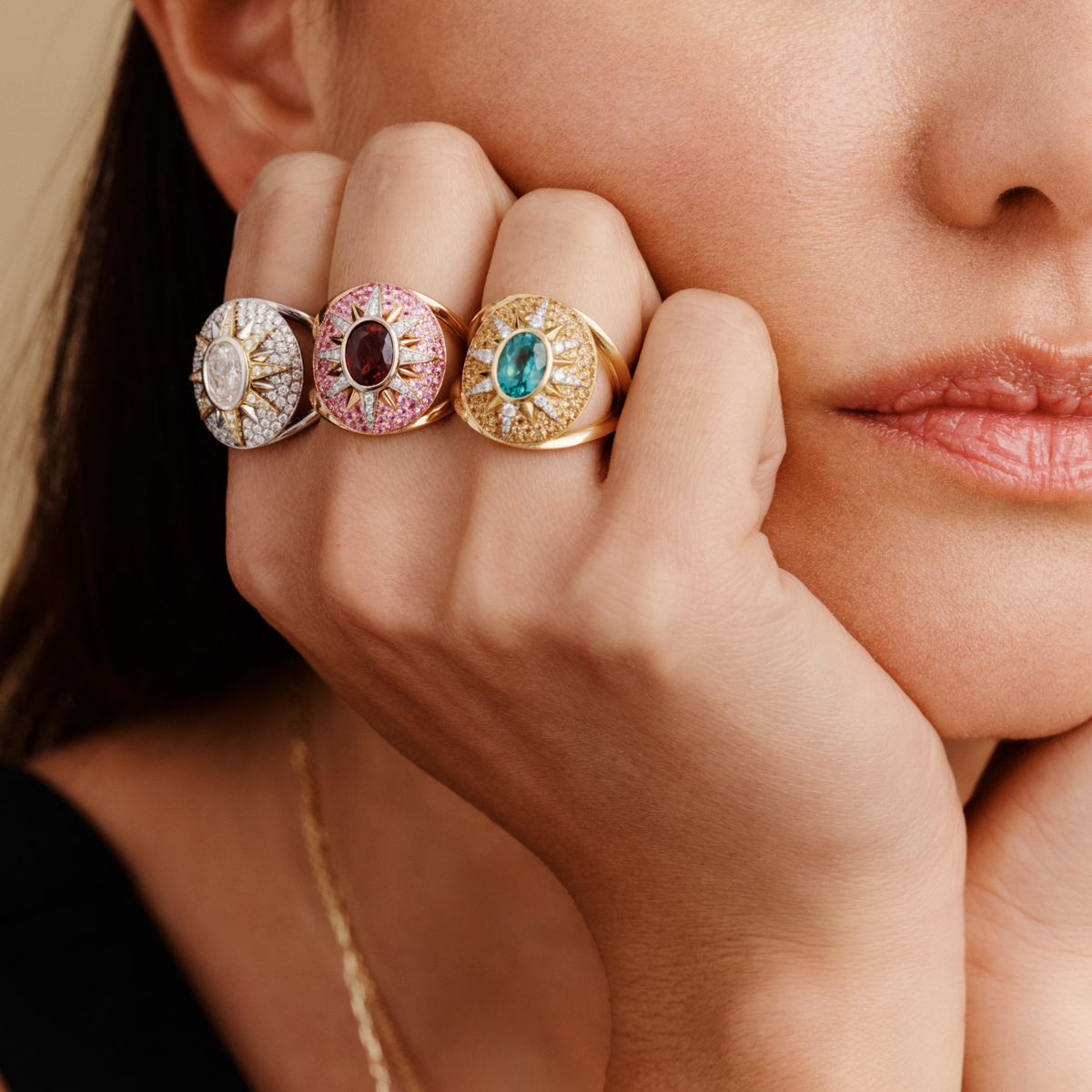
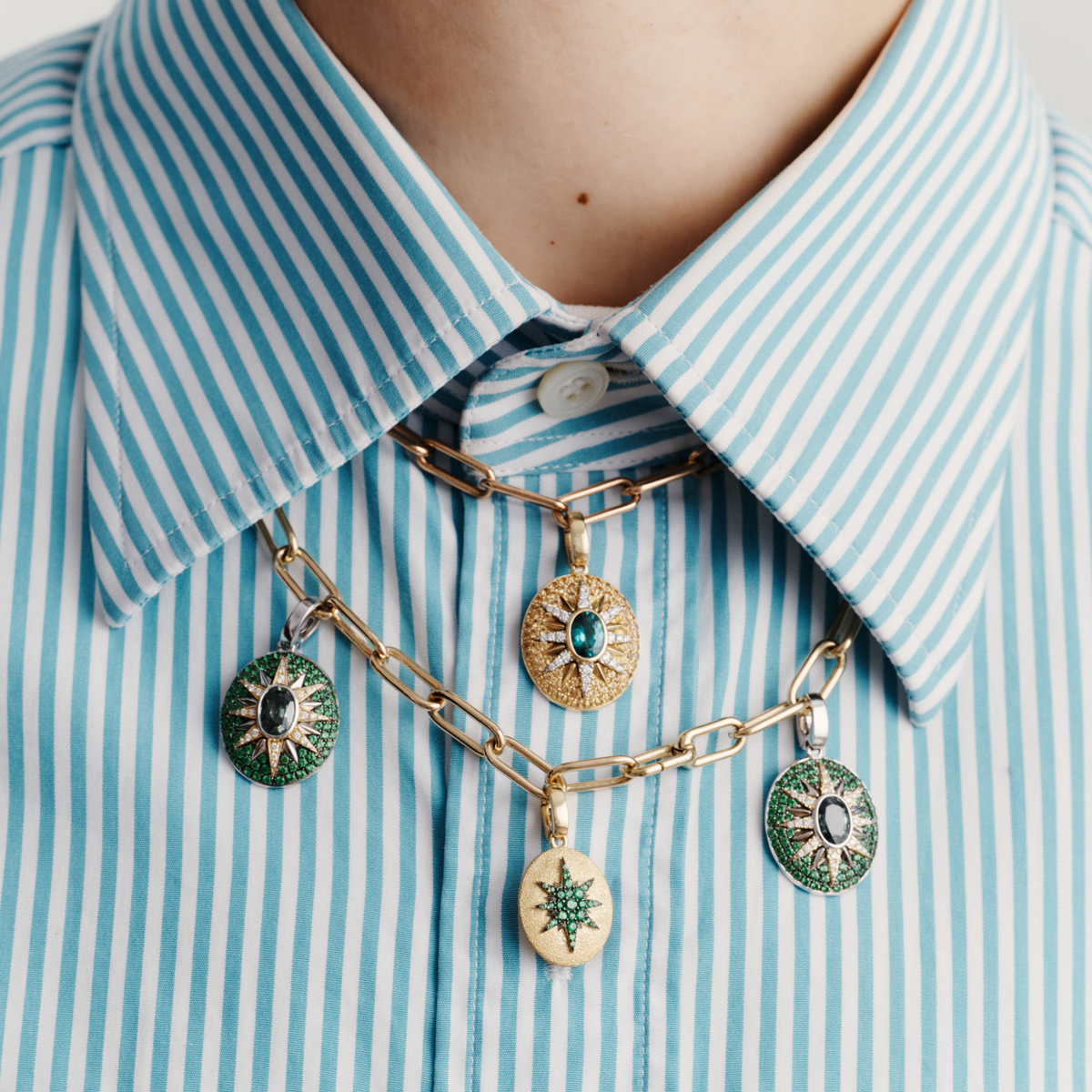
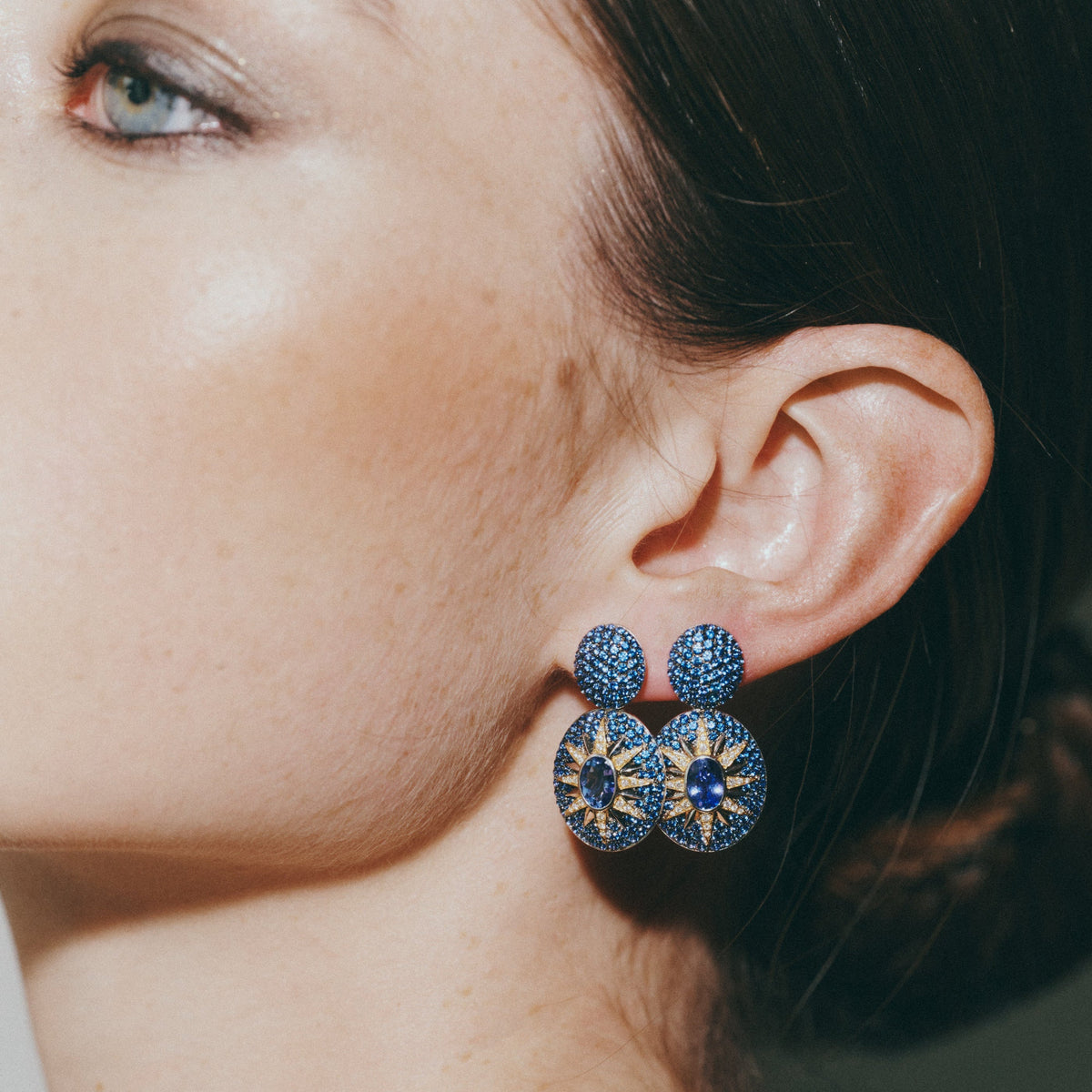
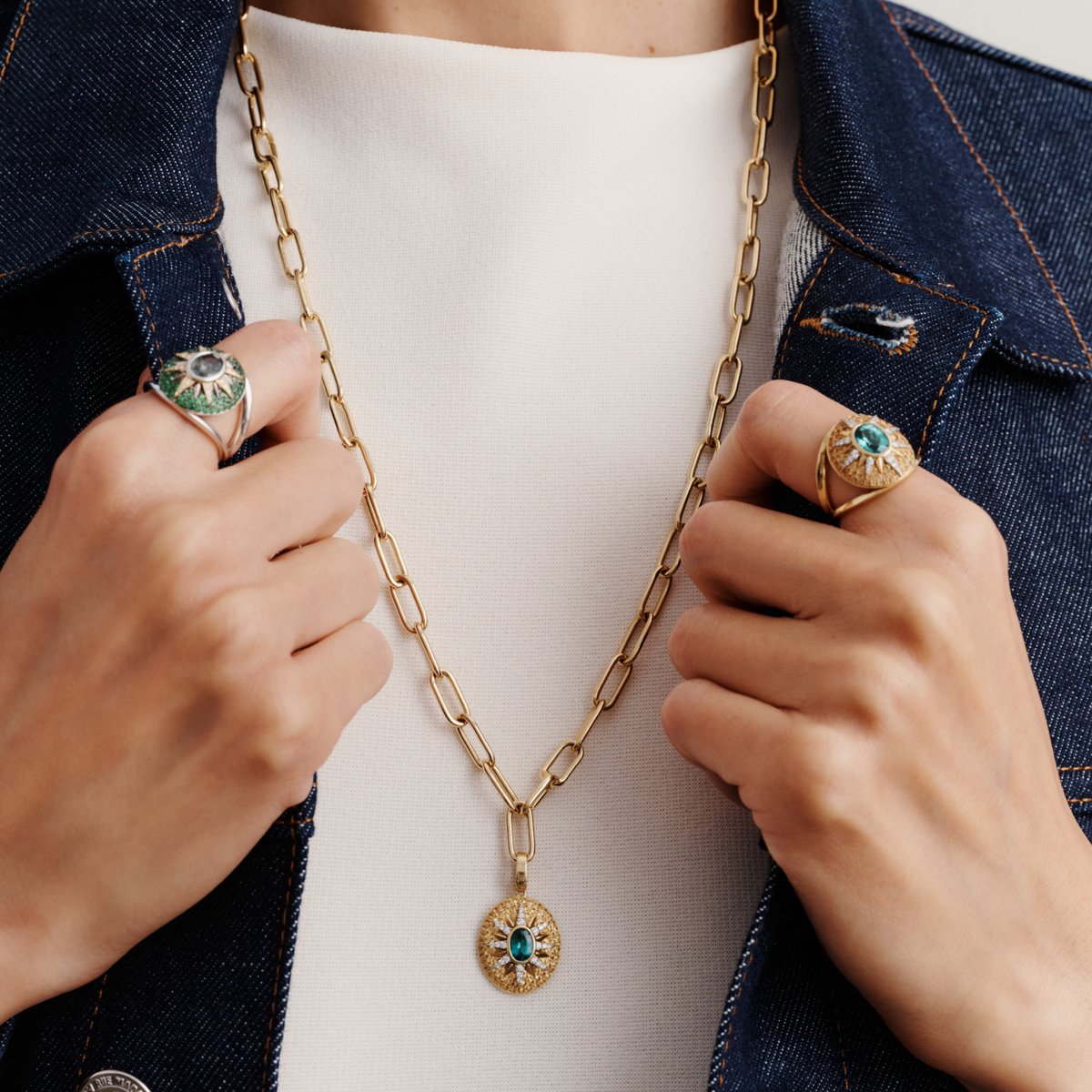
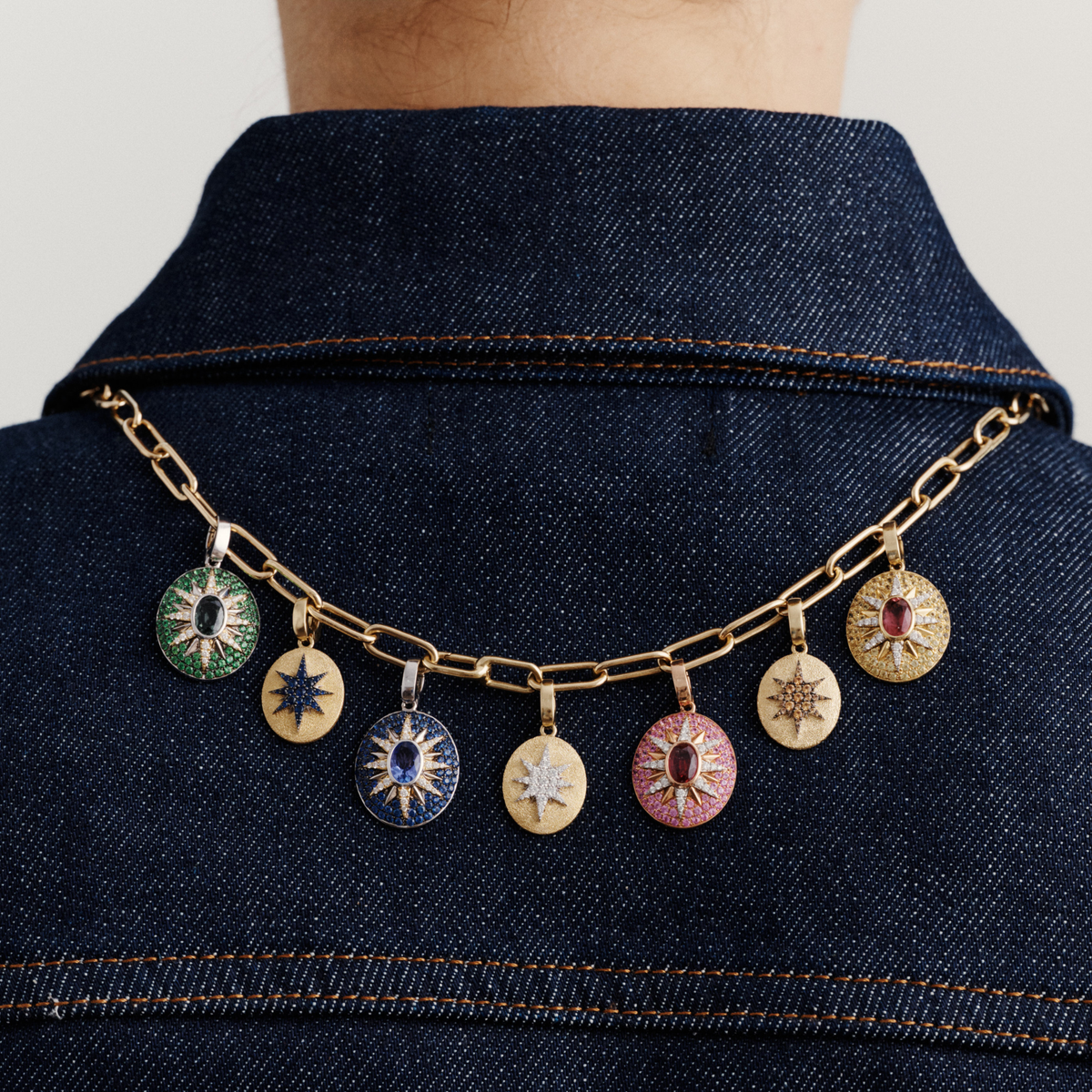
Materials can be verified on paper; craftsmanship must be seen. Look at the pavé: small stones should sit level, tight and secure, with no glue and no gaps. Look at the back of the piece, fine jewelry is finished where no one looks. Look for a design process: a jewel that began as a hand-painted gouaché and passed through a designer''s eye at every stage shows it in the coherence of its lines. Sloppy pavé on a big center stone is the oldest trick in jewelry; now you will spot it.
3. Price and value: what you are actually paying for
A fair fine jewelry price reflects gold weight, stone rarity and hours of workmanship, plus the margin any maison needs to exist. What it should not reflect is a logo tax disproportionate to the object. The test: would this piece justify its price with the brand name removed? Our creations start around €3,900 because that is what 18k gold, natural colored gemstones and Parisian design honestly cost; our fine jewelry buying guide breaks the anatomy of a fair price down further.
4. Resale and heirloom value
Fine jewelry is the rare purchase that survives you. Evaluate a piece as the next generation will: precious materials hold intrinsic value whatever happens to fashion; natural stones with documentation resell in a way undocumented stones never do; and designs with a clear signature age into recognizability rather than datedness. Costume and plated jewelry, however charming, carries essentially zero residual value, which changes the real cost of ownership entirely.
5. Care, repair and after-sale service
A jewel worn for decades will need a prong checked, a chain adjusted, a professional clean. Before buying, ask who will do this and at what cost. A maison that stands behind its pieces makes care easy, our care guide is public, and repairs of manufacturing defects are covered for a year, while an anonymous seller leaves you alone with a broken clasp. Service is the criterion buyers forget at purchase and remember forever after.
6. The buying experience
Where and how you buy is part of what you buy. Trying a piece in person, in good light, with someone who can explain the stones, produces better decisions than any screen, and becomes part of the jewel''s story. It is why we receive clients at the Ritz Paris, Place Vendôme, where every creation can be seen, tried and taken home. If a seller cannot show you the piece properly, that tells you something too.
7. Traceability and honesty about the stones
Serious houses tell you what a stone is, where it stands on treatments, and back it in writing. Evasive answers about origin or treatment are the clearest red flag in the entire evaluation. Precision is also gemological: a maison that calls its rubellite a tourmaline, its tanzanite a zoisite and its blue zircon a natural species, rather than borrowing more famous names, is a maison that respects both the stones and you.
8. Style longevity
The last criterion is the hardest to measure and the most expensive to get wrong: will you still wear it in fifteen years? Favor pieces with a point of view strong enough to be recognizable but pure enough to outlast trends, and favor maisons whose collections are built as coherent families, like our Crush Nova, designed to be collected over years rather than replaced each season.
The ten-minute evaluation, in practice
Here is the framework compressed into a boutique visit. Minute one: ask what the metal and stones are, and whether that comes in writing. Minutes two to four: examine the piece in your hand, turn it over, run a fingertip across the pavé, look at the finishing where no one is supposed to look. Minutes five and six: ask about treatments and origin, listening less to the answer''s content than to its comfort. Minutes seven and eight: ask what happens if a prong loosens in three years, who repairs it, at what cost. Minute nine: try the piece on and walk to daylight. Minute ten: ask yourself the only subjective question that matters, will I wear this in fifteen years? A seller who welcomes all ten minutes is telling you as much as the jewel is.
Red flags that end the conversation
Some signals justify walking away regardless of how beautiful the piece looks. No hallmark on the metal, or reluctance to explain it. Vagueness about whether stones are natural, or treatments described as secrets. Perfection priced suspiciously low, large, flawless, vivid stones have a market price, and dramatic undercuts mean something is not what it seems. Pressure discounting, where the price drops the moment you hesitate, which tells you what the first price was. And finally, no paper: a maison that will not document what it sells is asking you to carry all the risk of the transaction. Fine jewelry rewards patience; every one of these flags punishes the lack of it.
Questions buyers ask
Do all eight criteria matter equally? No: materials and honesty are disqualifying, a piece that fails them is out regardless of beauty, while experience and style longevity are weighting factors between finalists. Does a higher price guarantee higher quality? It guarantees nothing; it only buys the right to expect more, which is why the framework exists. Is a certificate really necessary for colored stones? For anything you may one day resell, insure, remount or pass down, yes, documentation is what separates an asset from an anecdote. Can I evaluate online purchases this way? Mostly: six of the eight criteria can be verified from a serious website and a conversation; craftsmanship and the stone''s true color are the two that justify seeing important pieces in person before committing.
The essentials to remember
Evaluate fine jewelry on eight criteria: materials, craftsmanship, honest price, heirloom value, service, buying experience, traceability and style longevity. A piece that passes all eight is not an expense but a transfer of value, from your account into an object that will outlive the trend, the season and quite possibly you. Browse our collections with this checklist in hand; we built them to pass it.