Building a Pendant Collection, One Stone at a Time
A single fine jewel is a pleasure; a pendant collection is a language. Among all jewelry categories, pendants are the ones women collect most naturally: they need no sizing, they layer together, and each new stone changes the meaning of the ones that came before. At our maison, we see it constantly: a client arrives for one pendant and returns, a season or a milestone later, for the color that completes it. This guide explains why pendants reward collecting, and how to build a collection with intention rather than accumulation.
Why pendants are made to be collected
Three properties set pendants apart. First, universality: unlike rings, a pendant fits forever, through every season of a body and a life, which makes each acquisition permanent rather than provisional. Second, combinability: two pendants are not just two jewels but three looks, each worn alone plus the pair layered together, and the possibilities compound with every addition. Third, visibility: worn at the collarbone, a pendant is the jewel people actually see, so a collection becomes a rotating signature. Browse our pendant collection and you will notice it is designed as a family for exactly this reason: pieces meant to be acquired over years and worn in conversation with each other.
Collect in color, not in quantity
The difference between a collection and a drawer of necklaces is a point of view. The strongest pendant collections are built like a painter's palette: a signature color worn constantly, a contrast that makes it sing, and one or two rarities that belong to almost no one else. Five stones chosen this way outshine fifteen bought on impulse. Before adding anything, ask what the new stone says next to the ones you own; if the answer is nothing new, wait for the stone that does. Our guide to choosing colored gemstones for your skin tone helps define the palette that will carry the whole collection.
Chapter one: your signature stone
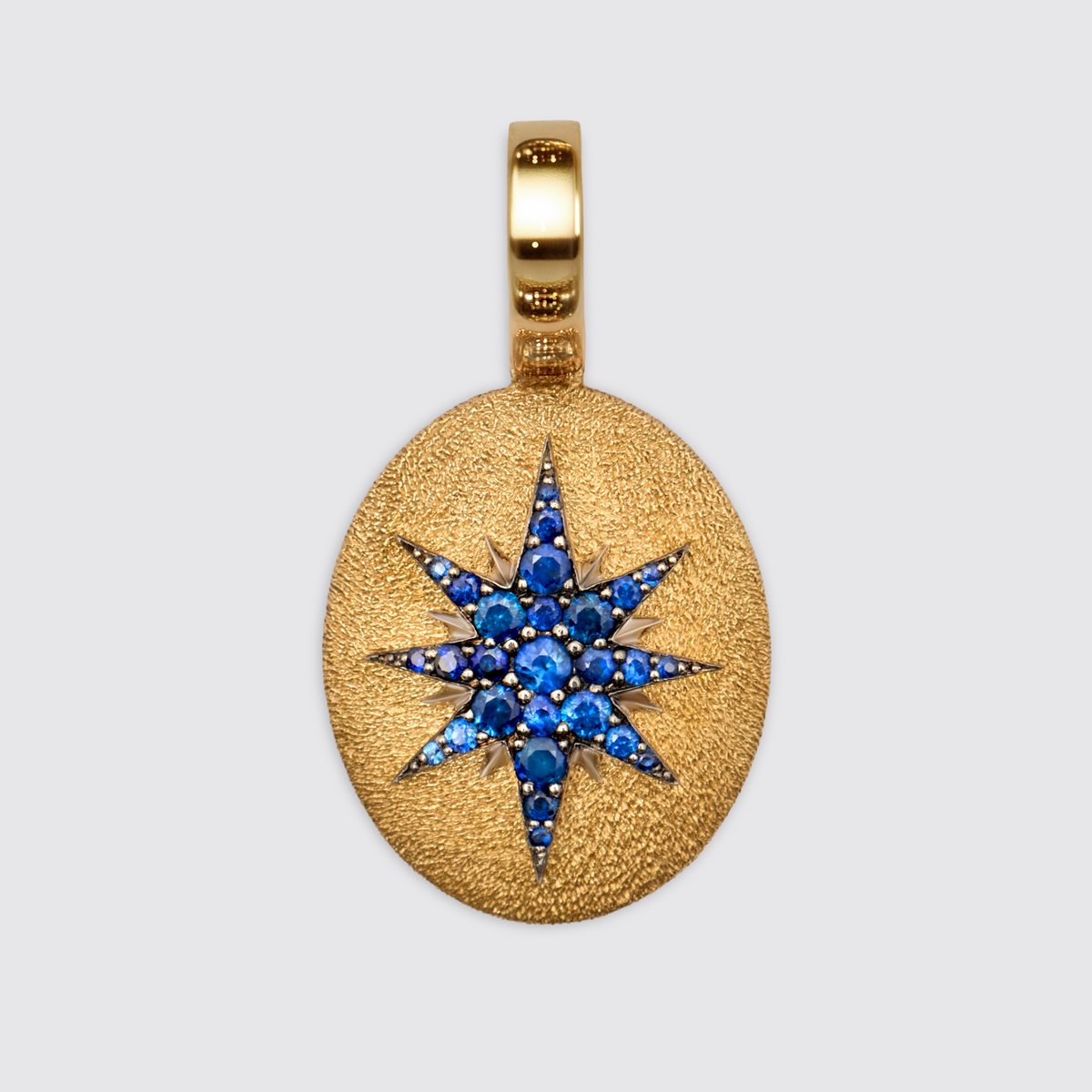
Every collection opens with the stone you will wear four days out of five. For most women it is either a diamond or a blue: the diamond for its diplomacy with every outfit, the blue for its depth. In our collections that first chapter is often a deep velvety stone from the sapphire jewelry collection, or the blue-violet glow of tanzanite, a zoisite found only near Mount Kilimanjaro, set in the Crush Nova tanzanite pendant. Choose this one slowly; it sets the key of everything that follows, and the rest of our tanzanite jewelry will still be there when you return.
Chapter two: the contrast
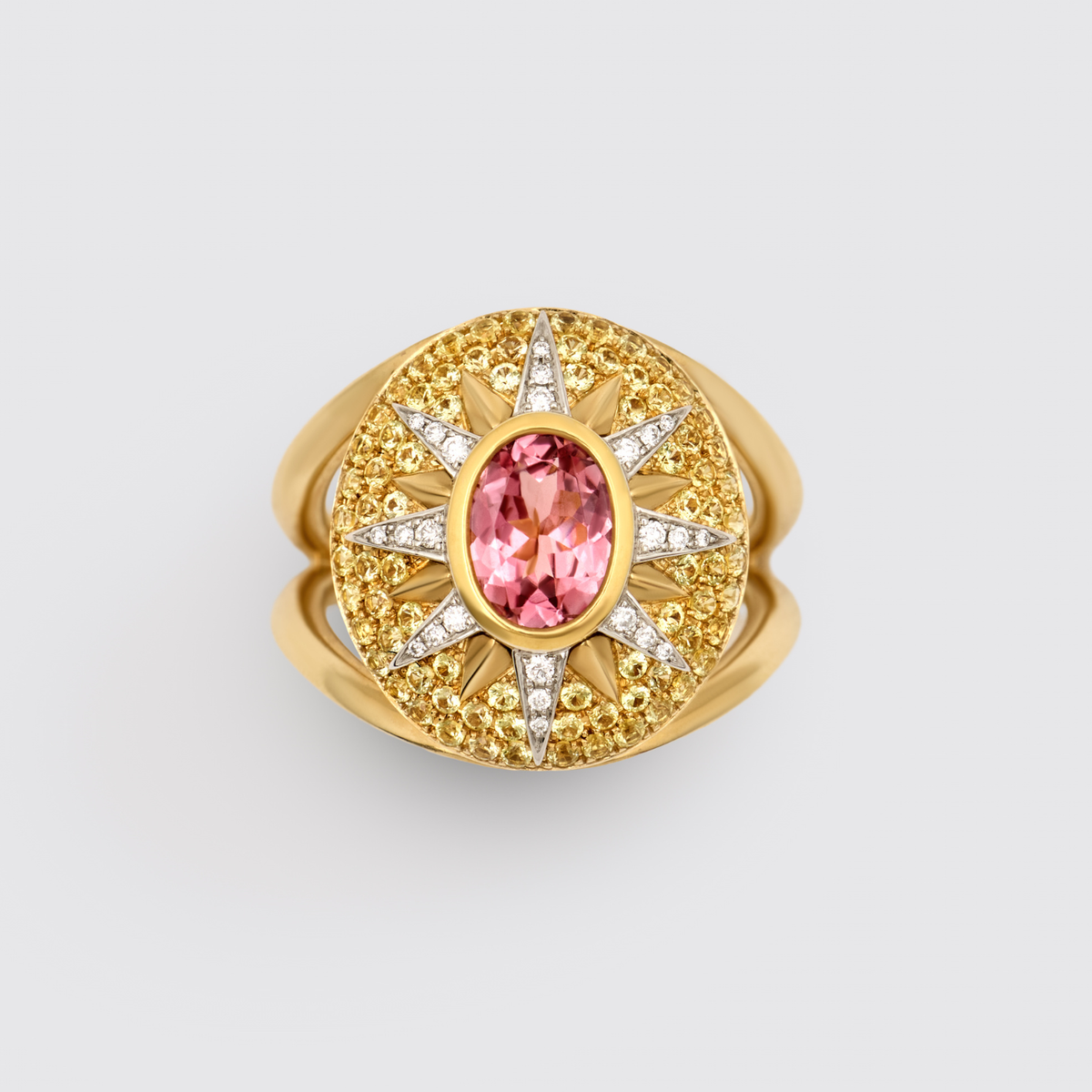
The second pendant exists to make the first more interesting. If your signature is blue, answer it with pink or red: the cherry rubellite pendant, set with the most intense pink-to-red member of the tourmaline family, turns a quiet blue stack electric. If your signature is a diamond, answer it with saturated color from our tourmaline fine jewelry. Worn together on staggered chains, signature and contrast already read as a collection; worn apart, they give you two moods from two jewels.
Chapter three: the stone almost no one owns
This is where a collection becomes personal. Beyond the famous gems lies a shortlist of stones that stop conversations precisely because they are rarely seen: blue zircon, a brilliant natural species with exceptional fire, gathered in our blue zircon jewelry collection; indicolite, the rare deep blue tourmaline; and spessartite, the mandarin garnet, blazing in the Crush Stella spessartite pendant. A collector's third stone should be the one strangers ask about. It is also, not coincidentally, the stone future generations will fight over.
One design language, many stones
What turns separate purchases into a true collection is a shared design language. Our two pendant families were drawn for this: the Crush Nova collection wraps each oval stone in sculpted rays of pavé, while the Crush Stella collection sets its gems within an 18k gold star. Every piece begins in Paris as a hand-painted gouaché, so a tanzanite Nova and a spessartite Stella, acquired years apart, still speak the same visual language on the same neckline. Collecting within a maison is like collecting an artist: the works differ, the hand is one.
Wearing a collection: the rotation and the stack
A collection earns its keep on the skin, not in the safe. Two habits make it live. The rotation: match the stone to the season and the mood, cool blues in summer light, embers of rubellite and spessartite against winter knits. The stack: layer two or three pendants on chains at least 5 cm apart, boldest stone lowest, using the lengths in our necklaces and layering necklaces; our guide on layering gold necklaces like a Parisian gives the full method. A three-pendant collection worn this way produces a week of different necklines.
Stones that mark a life
The deepest collections are chronological. A pendant for a promotion, a birthstone for a daughter's arrival, a rare stone for a round birthday: each acquisition dates itself, and the collection becomes a worn autobiography, the kind of gift logic we explore in our luxury gift guide. This is also the strongest argument for quality over quantity: stones bought to mark a moment are never replaced, only joined.
Budget and rhythm: what a collection really costs
In 18k gold with natural gemstones, our pendants start around €3,900, and a considered collection grows at the pace of one stone a year or one per milestone, not one per season. That rhythm matters: it spreads the investment, lets each piece earn its place, and gives the eye time to know what the palette is missing. Collectors who rush assemble inventory; collectors who wait assemble heirlooms. When hesitating between two stones, a private appointment at the Ritz, Place Vendôme settles it faster than any photograph: color is a thing you meet in person.
Keeping the collection beautiful
A growing collection needs a small discipline: each pendant in its own pouch so stones of different hardness never touch, chains closed before storage, a gentle wash with warm water and mild soap when the sparkle dims, and the certificates kept together as the collection's archive. Our care guide details the routine. Ten minutes a month protects decades of acquisitions.
Three collections, three logics
To make the method concrete, here are three ways real collections take shape. The monochrome: one color family explored in depth, a pale pink sapphire, a rose tourmaline, then the drama of rubellite, three intensities of one idea, unmistakable layered together. The spectrum: one stone per color family, blue, pink, green, orange, built slowly until the jewelry box holds a rainbow with no repeats. The chronology: stones chosen purely by what they commemorate, in whatever colors life happens to deliver, the least designed and often the most moving of the three. None is superior; the point is to know which collection you are building before the fourth purchase, because that is the moment a direction either appears or is lost.
The essentials to remember
Collect pendants the way you would build a palette: a signature stone first, a contrast second, a rarity third, all within one design language so the pieces converse. Grow at the pace of milestones, from €3,900 per chapter, wear the collection in rotation and in layers, and keep its papers as carefully as its stones. A pendant collection built this way does something no single jewel can: it tells, at the collarbone, the story of the woman wearing it.