How to Choose a Gemstone Pendant: The Complete Guide
A gemstone pendant is often the first piece of fine jewelry a woman buys for herself, and for good reason. It sits close to the face, works with almost any neckline, and lets a single colored stone express a personality in a way few other jewels can. Yet choosing one raises real questions: which gemstone, which gold, which setting, which chain length? This guide walks through each decision in order, so you end up with a pendant you will still reach for in twenty years.
Why a pendant is the smartest first piece of fine jewelry
Unlike a ring, a pendant does not depend on finger size, which makes it the easiest fine jewel to buy, to gift and to pass down. It is also the most visible: worn at the collarbone or just below, it frames the face and catches the light every time you move. Within our pendant collection, every piece is designed to work alone on a fine chain or as the anchor of a layered look, which means one purchase quietly becomes several outfits. If you are starting a fine jewelry wardrobe, a pendant gives you the highest number of wears per euro of any category in our jewelry collection.
Start with the stone
The gemstone is the soul of the pendant, so begin there. Think about the colors you already wear, the tones that flatter your skin, and the meaning you want the stone to carry. Our guide on choosing a colored gemstone for your skin tone goes deeper, but here is the short version by color family.
Blue stones: sapphire, tanzanite and blue zircon
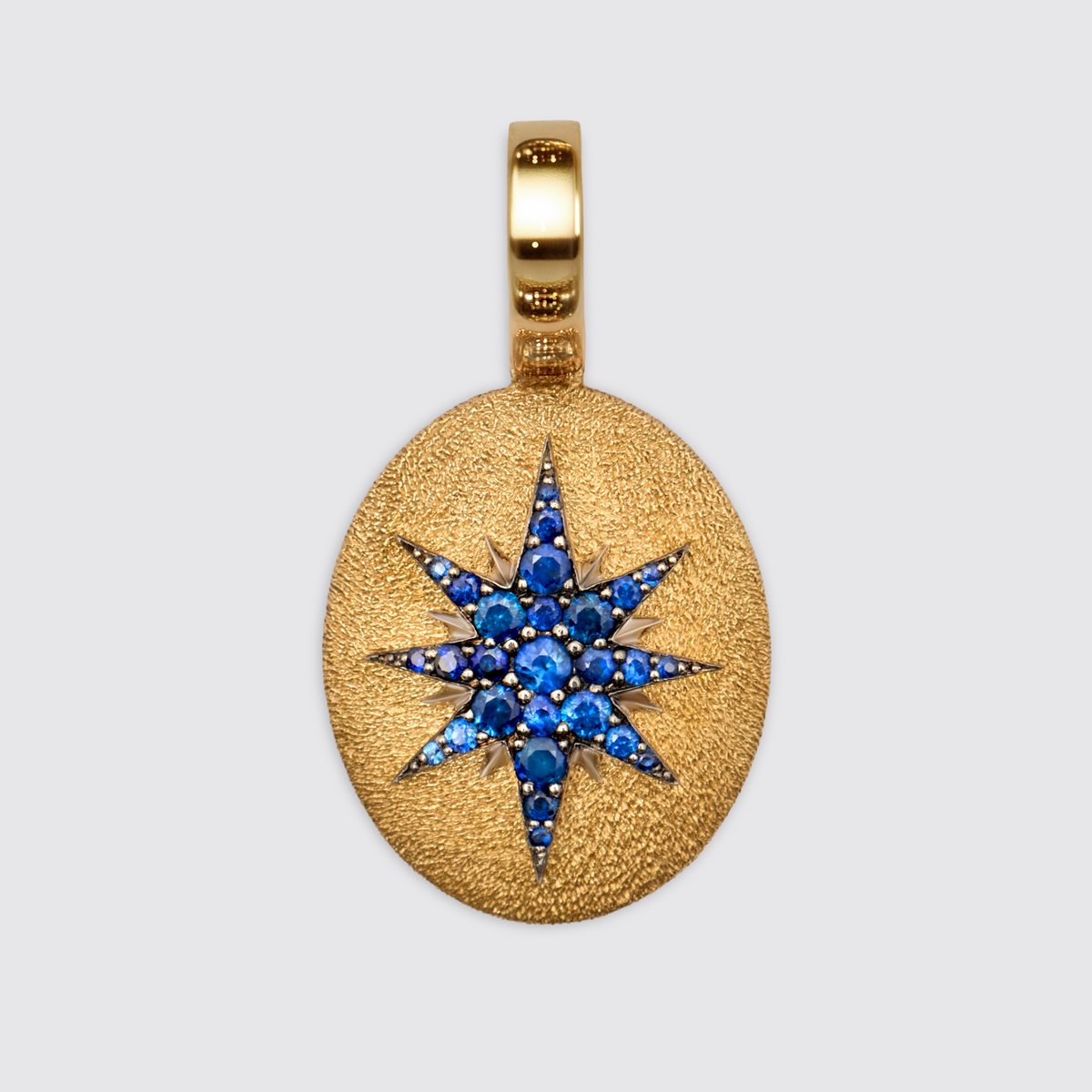
Blue is the most requested color in fine jewelry, and it covers three very different gems. Blue sapphire, the classic, offers a deep velvety blue and exceptional durability; explore it in our sapphire jewelry collection. Tanzanite is a gemstone in its own right, a blue-violet zoisite found only near Mount Kilimanjaro, prized for flashes of purple no sapphire can show; see it set in our Crush Nova tanzanite pendant and across our tanzanite jewelry. Blue zircon, a brilliant natural gem species not to be confused with cubic zirconia, delivers the most fire of the three: our blue zircon pendant pairs it with pink sapphire pavé, and the full range lives in our blue zircon jewelry collection.
Pink and red stones: pink sapphire, pink tourmaline and rubellite
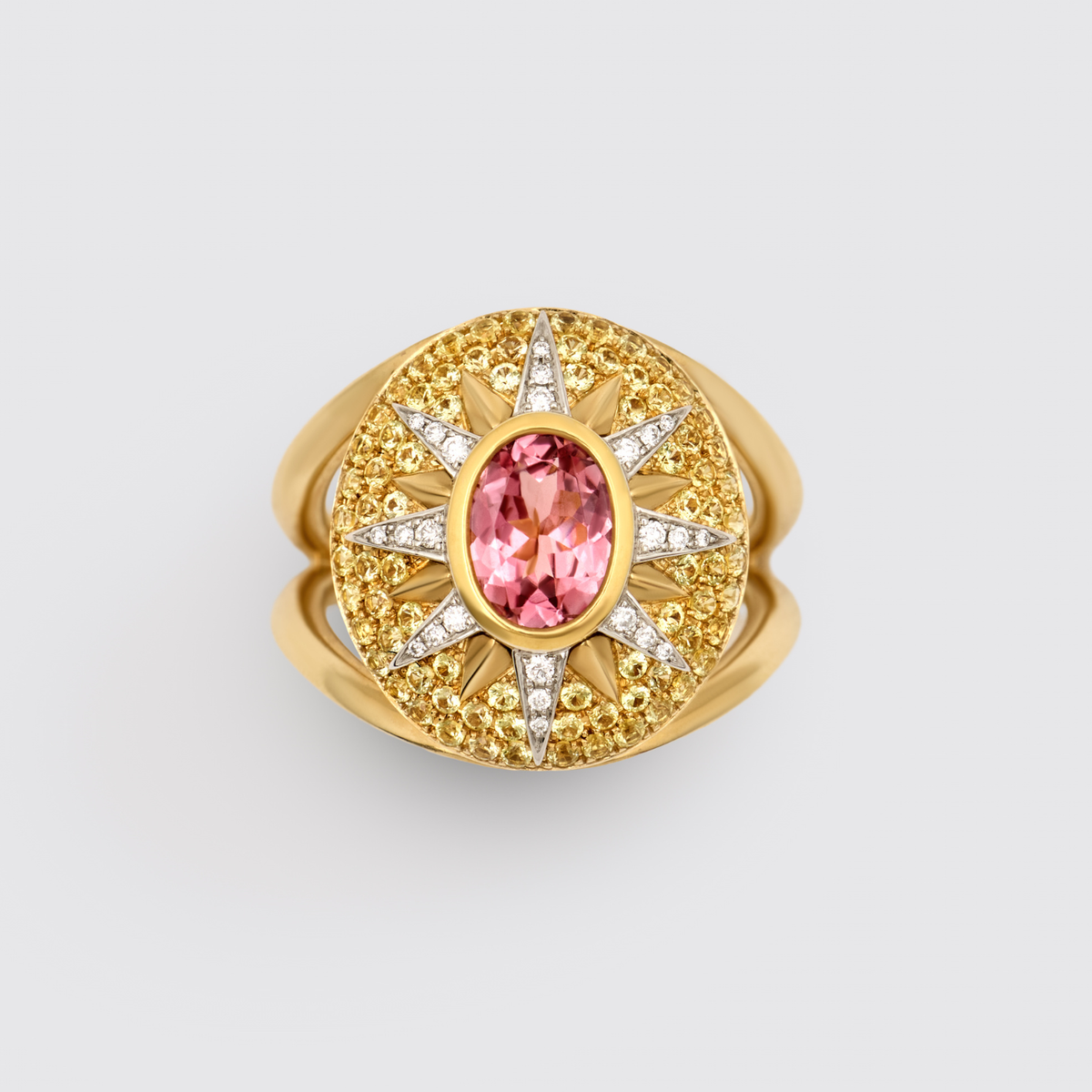
Pink stones read as both romantic and modern. Pink sapphire gives a crisp, luminous pink with everyday toughness. Pink tourmaline offers a softer, rosier glow, while rubellite, the most intense pink-to-red member of the tourmaline family, brings true evening drama. Both tourmalines are gathered in our tourmaline fine jewelry collection, including the pink tourmaline pendant with its unexpected yellow sapphire pavé.
Green, orange and yellow stones
For women who want color no one else is wearing, green sapphire and tsavorite garnet offer two very different greens, from deep olive to vivid grass, while spessartite garnet burns pure mandarin orange and yellow sapphire glows like late-afternoon sun. These stones shine in the sculptural settings of our Crush Stella collection, where the star motif amplifies every facet.
Diamonds
If you want one pendant that goes with absolutely everything, a diamond remains unmatched. Our Crush Nova diamond pendant treats the diamond not as a solitaire cliché but as a sculpted star of light.
Setting, gold and craftsmanship
A pendant lives on the body all day, so the mount matters as much as the stone. Look for 18k gold rather than lighter alloys: it carries the warmth and weight fine jewelry should have. Check that the bail, the small loop the chain passes through, is soldered and generous enough for the chains you own. At Raphaëlle Coqblin, every pendant is designed in Paris and begins as a hand-painted gouaché before it is crafted in 18k gold, with pavé work that wraps the stone in light from every angle. The designs of our Crush Nova collection are built around this idea: the center stone is the sun, the pavé its rays.
Chain and length
Most pendants are worn between 42 and 50 cm, sitting at or just below the collarbone, the most flattering zone for a single stone. If you plan to layer, choose lengths at least 5 cm apart so each piece has its own space. Browse our necklaces for chains designed to carry a pendant without competing with it.
What does a fine gemstone pendant cost?
In 18k gold with natural colored gemstones and precious pavé, expect fine jewelry pendants to start around €3,900 and rise with the rarity and size of the center stone; a large tanzanite or an exceptional rubellite naturally commands more. That entry point makes the pendant the most accessible doorway into a true fine jewelry maison, and a favorite in our luxury gift guide. Beware of prices that look too good for the words on the label: natural stones, 18k gold and real pavé work have an incompressible cost.
How to decide, in five questions
Before you buy, answer these: Which color do I keep coming back to? Do I want a stone with a story or pure versatility? Will I wear it daily or for occasions? Does the length suit my usual necklines? Does the maker certify the gold and the stones? If a pendant answers all five, it is the right one. And if you would rather decide in person, you can book a private appointment with Raphaëlle at the Ritz, Place Vendôme.
Reading quality in a colored stone
Four things separate a fine gemstone pendant from a forgettable one. Color first: look for saturation without darkness, a stone that stays alive in low light, not only under a spotlight. Cut second: facets should return light evenly across the whole stone, with no large dead window in the center. Craftsmanship third: on a pavé piece, the small stones should sit level and tight, with no visible glue and no gaps, because pavé is where ateliers cut corners first. Provenance last: a serious maison tells you what the stone is, whether it is natural, and stands behind it in writing; every Raphaëlle Coqblin creation ships with its own certificate of authenticity and warranty. If a seller hesitates on any of these four points, keep your budget in your pocket.
Caring for the pendant you choose
A pendant worn daily lives a surprisingly hard life: perfume, sunscreen, seawater and gym bags do more damage than years of normal wear. The routine is simple. Put the pendant on last, after fragrance and cosmetics have dried. Remove it for sport, swimming and sleep. Clean it monthly with warm water, mild soap and a soft brush, then dry it with a lint-free cloth. Store it hanging or flat in its own pouch so the chain cannot knot and harder stones cannot scratch it. Our full product care guide details the routine stone by stone. Ten minutes of care a month keeps an 18k gold pendant looking the way it did in the boutique for decades.
The essentials to remember
Choose the stone first, by color and meaning; insist on 18k gold and a soldered bail; aim for 42 to 50 cm unless you are layering; budget from €3,900 for natural stones and Paris craftsmanship; and buy from a maison that certifies what it sells. A gemstone pendant chosen this way is not a purchase, it is the beginning of an heirloom.