Blue Zircon vs Cubic Zirconia: Natural Gem vs Lab-Made Imitation
Few gemstones suffer from a naming problem as much as zircon. Because of its name, many people assume it is related to cubic zirconia, the inexpensive diamond imitation found in costume jewelry. In reality, comparing blue zircon vs cubic zirconia means comparing a natural gemstone formed over millions of years with a material produced in a laboratory. The two differ in composition, optical properties, value and meaning.
This guide clears up the confusion so you can buy with confidence and appreciate blue zircon for what it truly is.
What Is Blue Zircon?
Zircon is a natural mineral, a zirconium silicate, that forms in the Earth's crust. It is one of the oldest minerals on our planet: some zircon crystals have been dated to more than four billion years, which makes them precious to geologists studying the early Earth.
In jewelry, zircon has been appreciated for centuries. It exists in many colors, including golden, brown, red and green, but blue is by far the most popular. Blue zircon is admired for its exceptional brilliance and fire. Discover its history in our story of blue zircon.
What Is Cubic Zirconia?
Cubic zirconia is a synthetic crystal made of zirconium dioxide. Although the compound exists in nature in microscopic quantities, the cubic zirconia used in jewelry is entirely produced in laboratories, and has been mass-produced since the 1970s. It was developed mainly as an affordable diamond simulant. It is usually colorless but can be colored artificially, which is how "blue cubic zirconia" appears in fashion jewelry.
The Key Differences
Origin
Blue zircon is a natural gemstone extracted from the earth. Cubic zirconia is a manufactured material. This single difference is the foundation of their difference in value: natural gems are finite, while synthetic crystals can be produced in unlimited quantities.
Chemical Composition
Zircon is zirconium silicate, containing silicon. Cubic zirconia is zirconium dioxide, with no silicon. They share an element, zirconium, which explains the similar names, but they are different materials with different structures.
Optical Properties
Both materials are brilliant, but in different ways. Blue zircon is doubly refractive: light splits into two rays as it passes through the stone. Under a jeweler's loupe, looking through the top of a zircon, you can often see the back facet edges appear doubled. Cubic zirconia is singly refractive and shows no such doubling. Zircon also has a strong dispersion that gives it natural flashes of color, a fire that experienced eyes find livelier and more nuanced than that of cubic zirconia.
Density and Weight
Cubic zirconia is significantly denser than zircon and far denser than diamond, which means a cubic zirconia of a given size feels heavier in the hand. Gemologists use density measurements, among other tests, to distinguish them.
Color
The blue of zircon is a natural phenomenon of the crystal, ranging from sky blue to intense teal. The blue of cubic zirconia is created by adding coloring agents during manufacturing, often giving a uniform, somewhat flat tone.
Value
Fine blue zircon is a valued gemstone in fine jewelry, selected for the vividness and purity of its color. Cubic zirconia has very little intrinsic value and is mainly used in fashion jewelry. A piece set with blue zircon in 18k gold belongs to fine jewelry, meant to be worn for a lifetime. To learn more about what distinguishes fine jewelry, read our guide to fine vs costume jewelry.
Blue Zircon Meaning and Symbolism
Blue zircon is one of the traditional birthstones of December, alongside tanzanite and turquoise. It has long been associated with wisdom, prosperity and serenity, and was believed in some traditions to bring restful sleep and protection to travelers. If you are choosing a December gift, our comparison of tanzanite vs blue zircon will help.
How to Recognize Genuine Blue Zircon
Buy from a jeweler who clearly describes the stones used. A serious fine jewelry house will always specify whether a stone is natural and name it precisely. Look at the setting and metal as well: blue zircon is typically set in solid gold, not plated metal. Our article on what 18k gold is explains why this matters, and our guide to buying fine jewelry lists the questions to ask.
Blue Zircon Jewelry to Discover
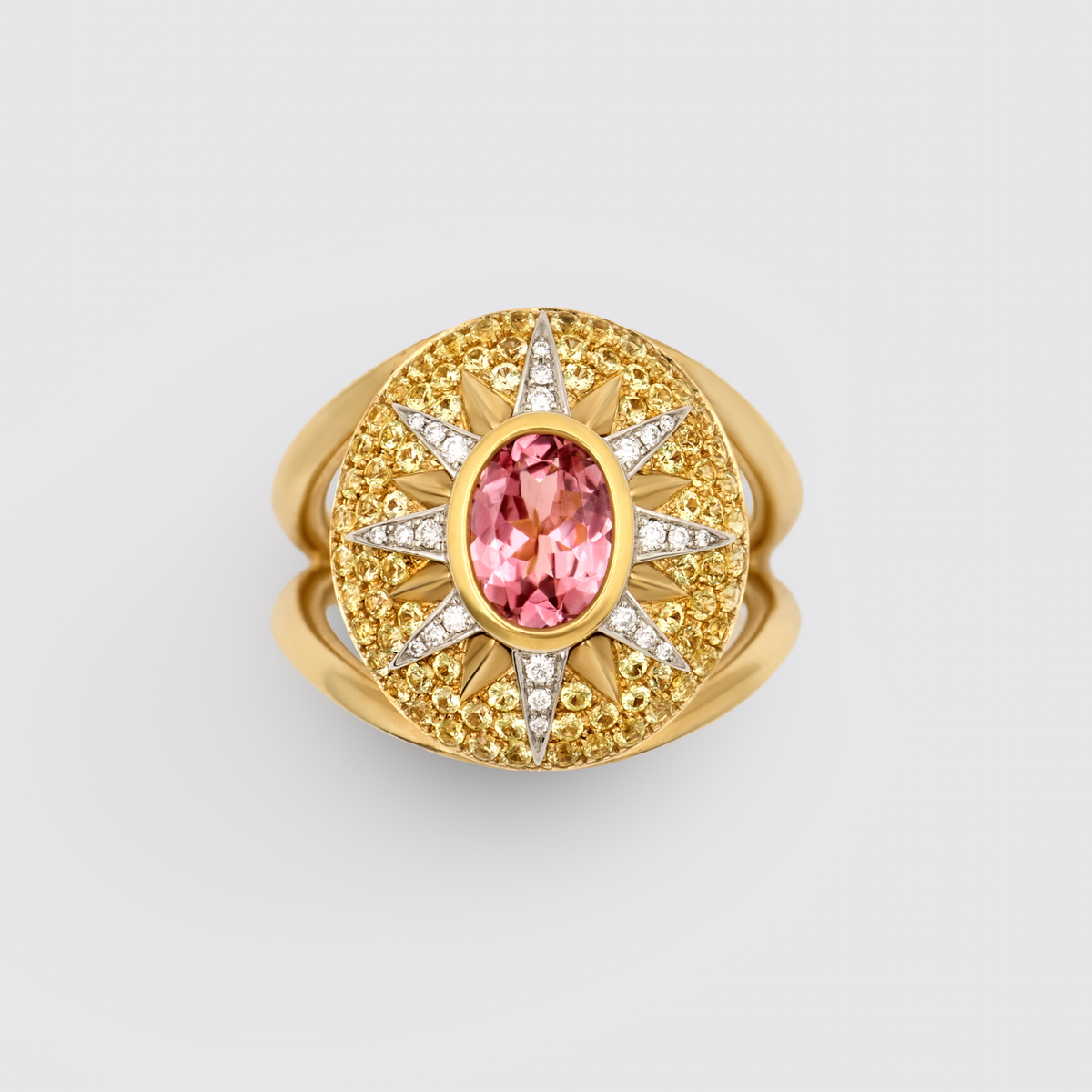
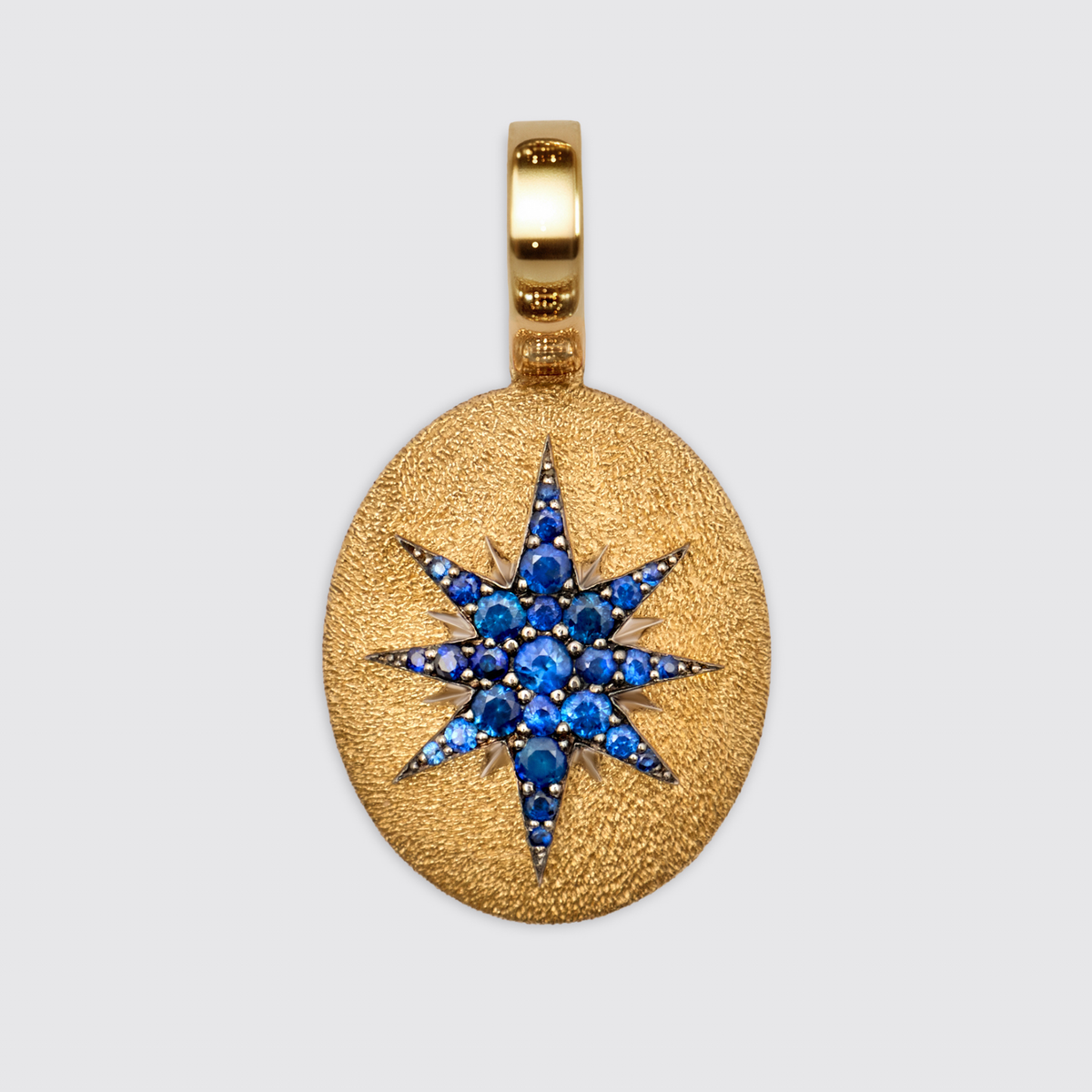
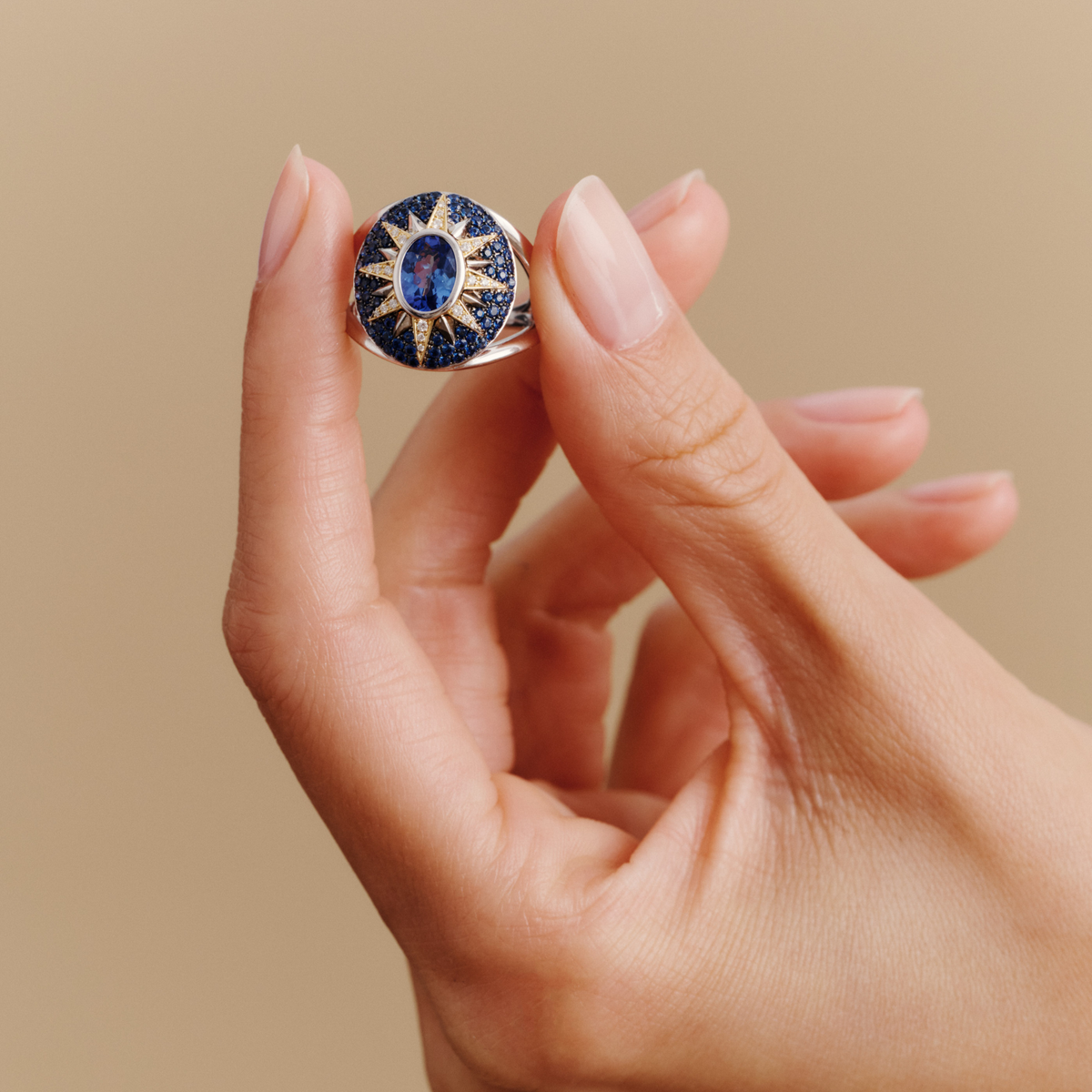
At Raphaëlle Coqblin, blue zircon is paired with pink sapphires, creating a luminous contrast between electric blue and soft pink. Discover it on the Crush Nova ring, the Crush Nova pendant and the Crush Nova earrings, all part of the Crush Nova collection. To compare blue zircon with other blue gems, read blue zircon vs blue topaz vs aquamarine or explore our sapphire jewelry.
Caring for Blue Zircon
Blue zircon is fairly hard but its facet edges can wear if knocked. Wear rings with care, clean the stone with lukewarm soapy water and a soft brush, avoid ultrasonic and steam cleaning, and store it separately. See our care guide.
Summary
Blue zircon and cubic zirconia share only a similar name and one chemical element. Blue zircon is a natural zirconium silicate, among the oldest minerals on Earth, doubly refractive, full of natural fire and valued in fine jewelry. Cubic zirconia is a synthetic zirconium dioxide produced since the 1970s as an inexpensive imitation. Choosing blue zircon means choosing a genuine gemstone, a December birthstone with a rich symbolism, meant to be worn for a lifetime.