How to Layer Pendant Necklaces Without the Tangle
Learning how to layer pendant necklaces is the fastest way to multiply a fine jewelry wardrobe without buying a dozen pieces. Two or three chains, one meaningful stone, and the whole look changes. But layering done casually ends in tangles, competing pendants and a neckline that reads busy rather than curated. Here is the Parisian method: a few firm rules, then total freedom inside them.
Rule one: space your lengths
Everything starts with intervals. Keep at least 5 cm between each chain so every piece has its own line on the skin: 40, 45 and 52 cm is the classic trio. Chains at identical lengths will twist around each other within the hour. If two necklaces you love are the same length, wear one of them on a longer chain rather than fighting physics. The pieces in our layering necklaces collection are designed around these intervals, and our foundational guide on how to layer gold necklaces like a Parisian details the length system chain by chain.
Rule two: one statement stone, never two
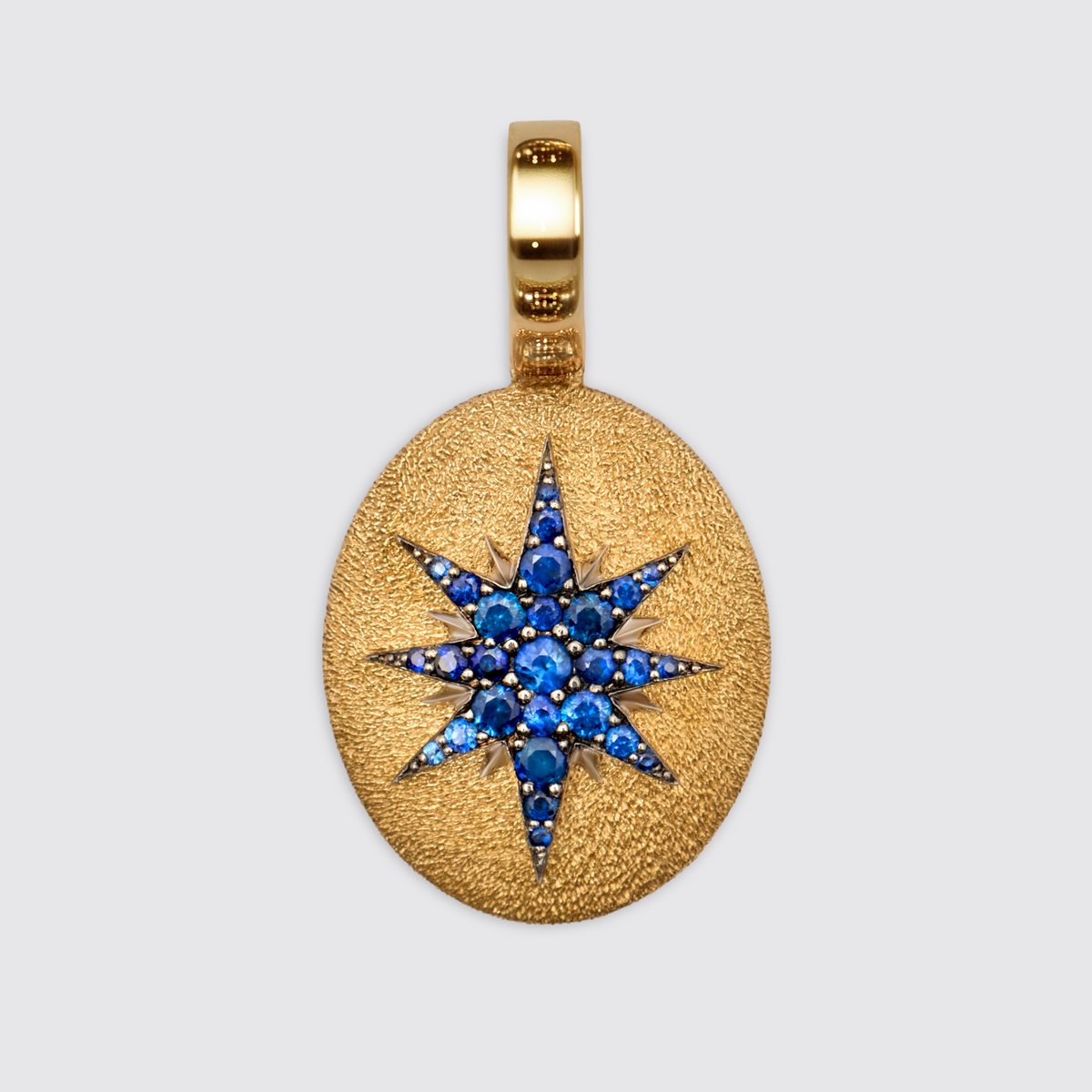
A layered look needs a hierarchy. Choose a single hero pendant, give it the middle or bottom position, and let everything above it stay fine and quiet. Two large pendants at different lengths do not double the effect, they cancel each other. A sculptural piece like the Crush Nova indicolite pendant, with its deep blue tourmaline wrapped in yellow sapphire rays, carries an entire stack on its own; everything else in the look exists to frame it.
Mixing golds: yes, with intention
Yellow, white and rose gold layer beautifully together when the mix looks deliberate. The trick is repetition: if you introduce white gold, let it appear twice in the stack, in a chain and in a pavé detail, so it reads as a choice. One stray metal in a stack of three reads as an accident. An all-yellow-gold stack with a single white-gold pendant at the bottom, however, is intentional by construction: the exception becomes the focal point.
Mixing gemstone colors
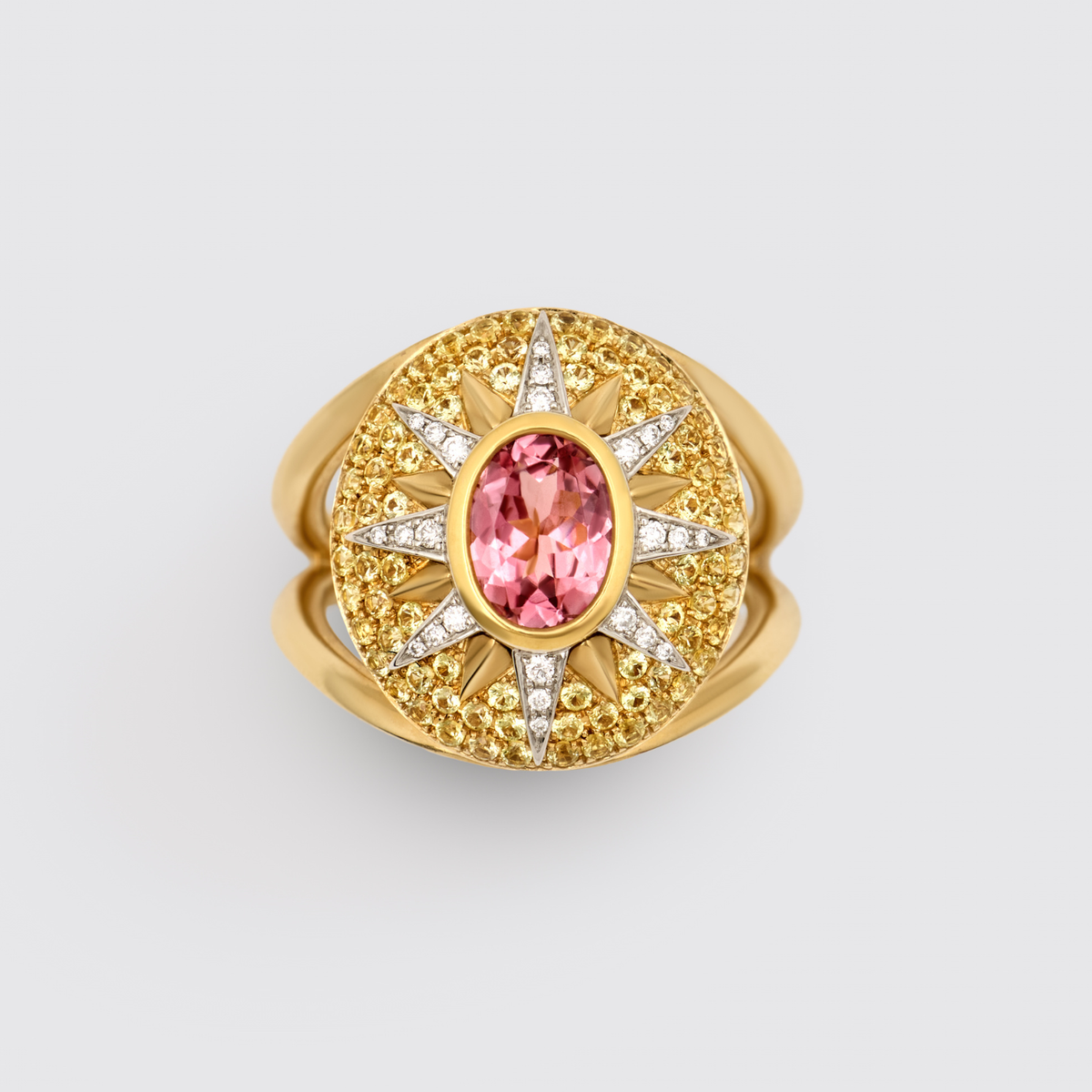
Colored stones layer in two ways. The tonal route keeps one color family in different intensities, a pink sapphire pendant above a rubellite, for instance, which creates depth without noise. The contrast route pairs complementary colors, blue with orange, pink with green, and works best when the two stones share a setting style. The star settings of our Crush Stella collection and the ray motif of Crush Nova were designed as a family precisely so their stones can mix: a Crush Stella pink sapphire pendant above a green or blue Nova reads as one composition, not two necklaces. For choosing which colors flatter you most, our guide to colored gemstones by skin tone is the place to start.
Layering by occasion
For the office, two chains maximum: a fine 40 cm chain and one pendant at 45 cm, polished and quiet. For evening, build to three or four layers and move the statement stone lower, around 50 to 52 cm, where it plays against the neckline of a dress. For weekends, one long chain at 55 cm or more over knitwear replaces the whole stack. The same pendants serve all three lives; only the chains and the count change. Explore different drops across our pendants and necklaces to build a rotation rather than a single look.
The anti-tangle toolkit
Tangles come from storage, not from wearing. Hang necklaces separately or close each one before laying it flat; never drop two open chains in the same pouch. When traveling, thread each chain through a drinking straw or its own zip pouch. Putting a stack on in the right order helps too: longest first, shortest last, and the reverse when removing. Finally, clasp weight matters: heavier clasps rotate to the back and stay there, keeping each chain in its lane.
If a tangle happens anyway, resist pulling. Lay the knot flat on a hard surface, dust it with a drop of oil or talc, and tease it open with two pins, working from the edges of the knot inward. Five patient minutes save a chain; one impatient tug can stretch 18k gold links permanently. For fine chains that knot repeatedly, the cause is usually a pendant too heavy for the gauge: rebalance the pairing rather than blaming the chain.
Start small, then build
If layering is new to you, start with two pieces: the pendant you already love and one fine chain 5 cm shorter. Wear that duo for a week, then add a third length only if you miss it. Layering is a wardrobe, not a costume: it should grow one meaningful piece at a time, which is exactly how heirlooms accumulate.
The three-chain formula, step by step
If you want a method rather than principles, here is the one our clients use. Step one: choose the hero, the pendant with the stone that means something, and give it 45 or 50 cm. Step two: add a plain chain 5 cm above it, fine gauge, no pendant, whose only job is to draw a second line of gold on the skin. Step three, optional: add a third element 5 to 7 cm below the hero, either a longer chain or a second, smaller pendant in a quieter stone. Dress the stack in that order every morning and it falls into place in under a minute. When one element feels wrong, change the top chain first; it is the cheapest fix and the most visible one.
Finish the look: ears and hands
A layered neckline changes what the rest of the jewelry should do. With two or three chains at the collarbone, keep the ears simple: studs or small drops from our earrings collection rather than long statement pieces that compete in the same visual zone. Hands, by contrast, can afford drama precisely because they are far from the neckline: a bold stone from our colorful gemstone rings balances the composition, and our guide to styling cocktail rings shows how far that idea can go. The rule of the whole silhouette is the same as the rule of the stack: one hero per zone, everything else in a supporting role.
Building the collection over time
The best stacks are accumulated, not purchased in one afternoon. A sensible order of acquisition: first the hero pendant, the stone you will wear for decades; second the fine companion chain that makes it a duo; third a second pendant in a contrasting color or metal, bought for a milestone so the stack carries dates as well as gold; fourth, if you layer daily, a longer chain for winter necklines. Spacing purchases out does more than spread the budget: it lets each piece earn its place, and it turns the finished stack into a worn autobiography. Jewelry you can read is jewelry you never tire of.
The essentials to remember
Five centimeters between chains, one statement stone per stack, metals mixed in pairs, colors mixed by tone or by deliberate contrast, and storage that keeps every chain closed and separate. Master these five habits and every pendant you own becomes several necklaces.