Colored Gemstone Engagement Rings: A Guide Beyond the Diamond
The diamond solitaire has long been the default, but a growing number of couples now look for something more personal. Colored gemstone engagement rings offer the chance to choose a stone that reflects a personality, a favorite color or a shared memory. Yet an engagement ring is meant to be worn every day for decades, so the choice of stone requires a little knowledge.
This guide explains which gemstones are best suited to daily wear, how to compare them, what to look for in the design and how to care for the ring over a lifetime.
Why Choose a Colored Gemstone?
A colored stone makes an engagement ring immediately unique. It can echo the color of her eyes, a meaningful place, a birthstone or simply her favorite shade. Color also allows more creative designs, combining a center stone with accents of a second color. Finally, many colored gemstones offer a larger, more striking stone at a comparable budget to a diamond.
The Key Criterion: Durability
An engagement ring is exposed to daily knocks, friction and contact with surfaces. The first factor to consider is the hardness of the stone, measured on the Mohs scale from 1 to 10, together with its toughness, meaning its resistance to chipping.
Diamond: 10
The hardest natural material, diamond remains the reference for durability. Diamonds can also be combined with color in a modern design, as on the Crush Nova ring in diamonds. Read our story of diamonds.
Sapphire: 9
Sapphire is the best colored stone for an engagement ring. With a hardness of 9, it withstands daily wear remarkably well and exists in a wide range of colors, from blue to pink, yellow, lavender and green. Discover the options in our guide to sapphire colors and our sapphire jewelry.
Tourmaline and Garnet: 7 to 7.5
Tourmalines, including pink tourmaline, rubellite and indicolite, and garnets such as tsavorite are durable enough for a ring worn with care. They offer beautiful colors and generous sizes, but may show wear on facet edges over many years of daily use, and benefit from a protective setting.
Tanzanite: 6 to 6.5
Tanzanite is one of the most beautiful blue-violet stones, but its lower hardness and sensitivity to shocks make it more suitable for rings worn occasionally than for an everyday engagement ring, unless the setting offers real protection. Our comparison of tanzanite vs blue sapphire explains the trade-off.
Emerald: 7.5 to 8, but Brittle
Emerald is hard but often included and relatively brittle, which calls for caution in an engagement ring. Green sapphire is an excellent, more resistant alternative; see green sapphire vs emerald.
Choosing the Color
Blue remains the most classic colored choice, symbol of loyalty and elegance. Pink evokes tenderness and romance, green renewal and nature, yellow joy and warmth, lavender poetry and softness. Think about her personal style and the colors she already wears. Our guide on choosing a colored gemstone for your skin tone can guide you.
Choosing the Design
The Setting
For a ring worn every day, the setting must hold the stone securely and protect its edges. Settings that surround the stone offer more protection than tall, exposed prongs.
A Center Stone With a Halo
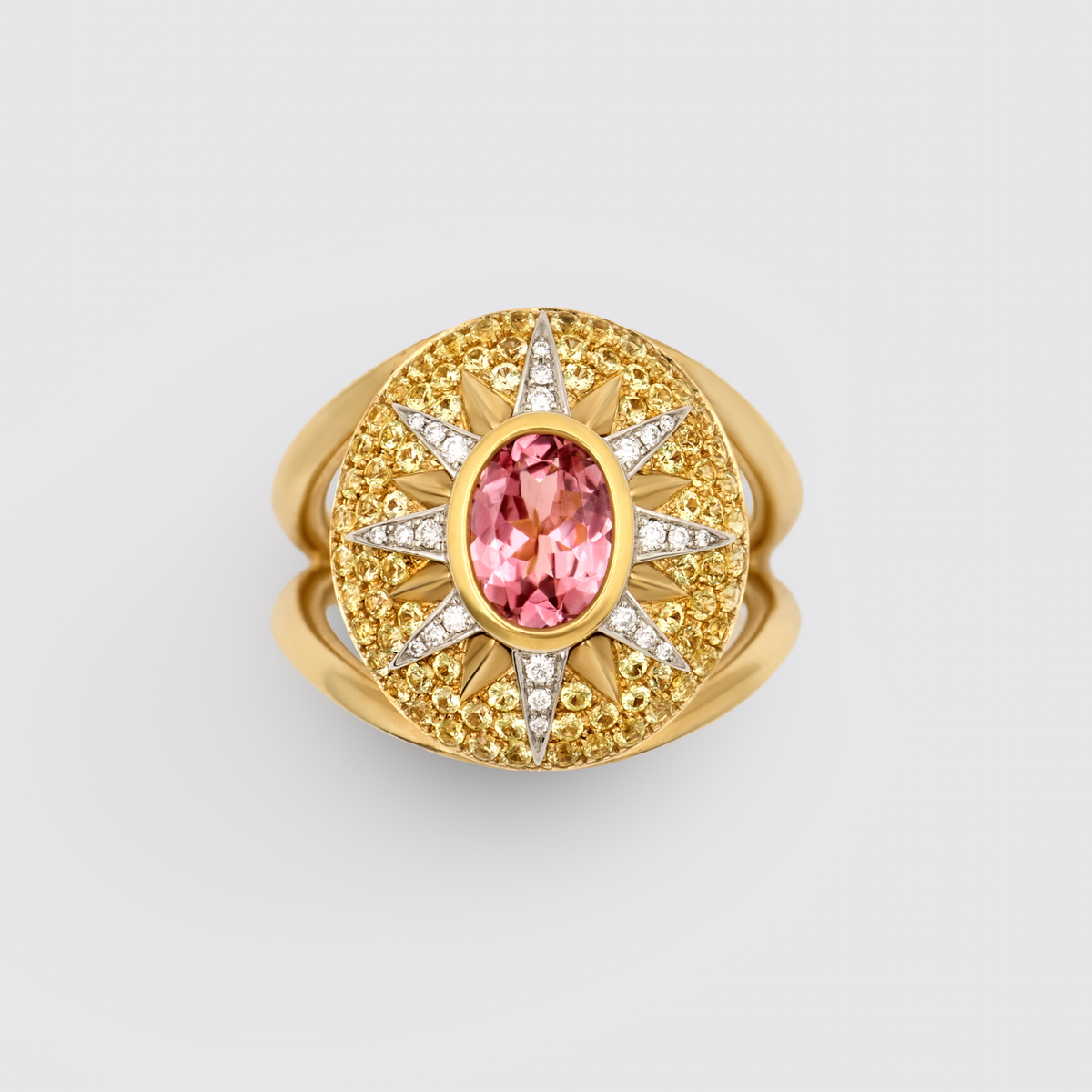
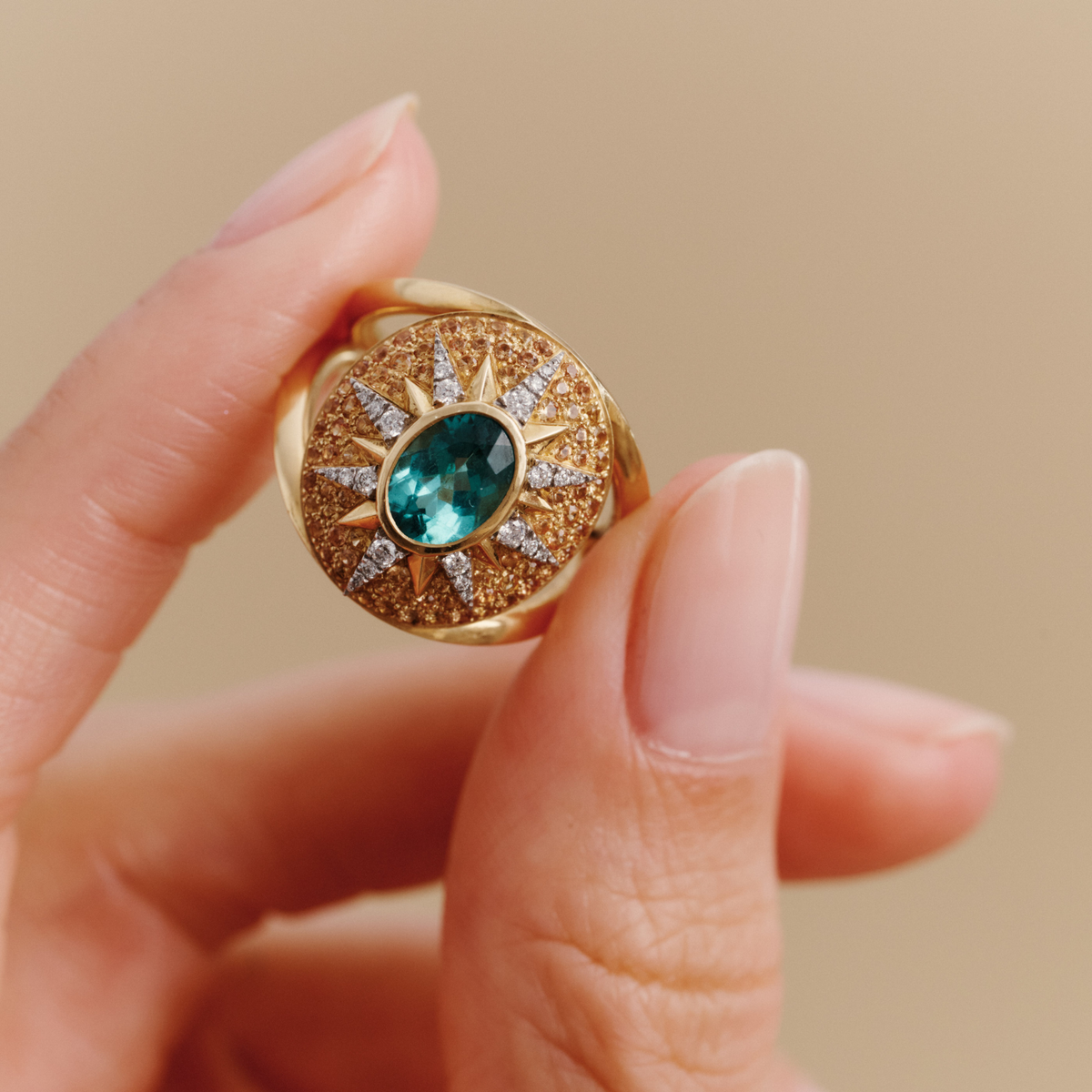
Surrounding a center stone with smaller stones adds sparkle, visual size and some protection. Combining two colors creates a truly personal ring. The Crush Nova collection is built on this idea: the tanzanite and blue sapphire ring, the green sapphire and tsavorite ring or the yellow and lavender sapphire ring each tell a different color story.
The Metal
Yellow gold warms pink, red, yellow and green stones; white gold enhances blue and lavender; rose gold softens pinks. Choose 18k gold for its rich color and value; read yellow gold vs white gold for colored gemstones.
Getting the Size Right
Discreetly borrow a ring she wears on the ring finger, or measure with our ring size guide. Fingers can vary with temperature and time of day, so measure at the end of the day in a mild temperature.
Caring for a Colored Engagement Ring
Remove the ring for sports, gardening and household chores, and clean it regularly with lukewarm soapy water and a soft brush. Have the setting checked by a jeweler once a year to ensure the stones are secure. Our care guide gives more detail.
Need Advice?
Choosing an engagement ring is a personal decision, and every stone has its own character. Explore all our fine jewelry rings and colorful gemstone rings, and do not hesitate to reach our team through the contact page for personalized guidance.
Summary
Colored gemstone engagement rings offer a personal alternative to the diamond solitaire. For daily wear, sapphire is the best colored choice thanks to its hardness of 9 and wide color range; tourmalines and garnets work with care and a protective setting; tanzanite and emerald are better for occasional wear or require a very protective design. Choose a color that tells her story, a secure setting, 18k gold and the right size, and care for the ring regularly to enjoy it for a lifetime.