Yellow Gold vs White Gold: Which Setting for Colored Gemstones?
Yellow gold or white gold for a coloured gemstone? The setting metal is the second most important decision in a piece of gemstone jewellery, after the stone itself, and it is the one buyers most often make by habit. Yet the same sapphire looks noticeably different in yellow gold and in white gold: warmer or cooler, deeper or brighter, more classic or more contemporary. Choosing well means understanding how each metal interacts with colour, with skin tone and with wear.
This guide compares yellow gold, white gold and rose gold as settings for coloured gemstones. It explains what each metal does to a stone's colour, which stones suit which metal, how skin tone changes the answer, and the practical differences in durability and maintenance. It closes with specific recommendations for blue, green, pink and red stones.
What the three golds actually are
All fine jewellery gold is an alloy. 18k gold is 75 percent pure gold; the remaining 25 percent determines the colour. Yellow gold is alloyed with silver and copper in balance, keeping gold's natural warm tone. Rose gold uses more copper, which gives the pink to red tint. White gold is alloyed with white metals, typically palladium or nickel, and is almost always finished with a thin rhodium plating that gives it a bright, cool, mirror-like surface.
That last detail matters: white gold without its rhodium plating has a faintly warm, greyish tone. The plating wears over time, especially on rings, and needs renewing every few years to keep the bright white look. Yellow and rose gold are the same colour all the way through and never need re-plating.
How metal colour changes how a gemstone looks
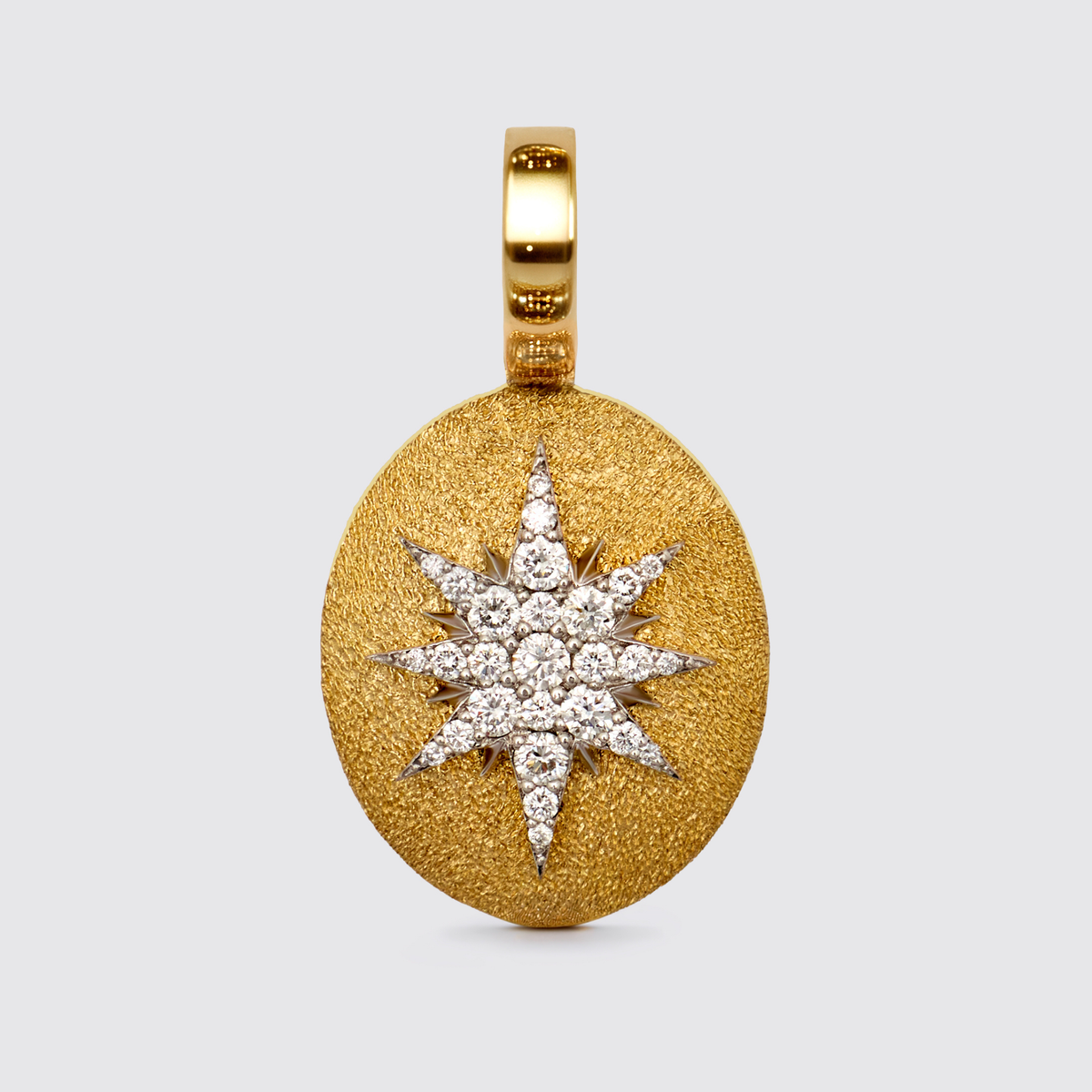
Metal reflects into the stone and frames it. A yellow gold setting adds warmth: it deepens reds and pinks, enriches greens, and makes blues look slightly more violet or more saturated by contrast. A white gold setting adds coolness and light: it makes blues look crisper and icier, keeps pinks fresh, and provides a neutral frame that lets an unusual colour speak for itself. Rose gold sits between the two, flattering pinks and reds directly and softening blues and greens.
The effect is subtle but real, and it is strongest at the prongs and the gallery, where the metal touches the stone. In a bezel setting, where the metal fully surrounds the stone, the influence on perceived colour is even greater.
Yellow gold: warmth and tradition
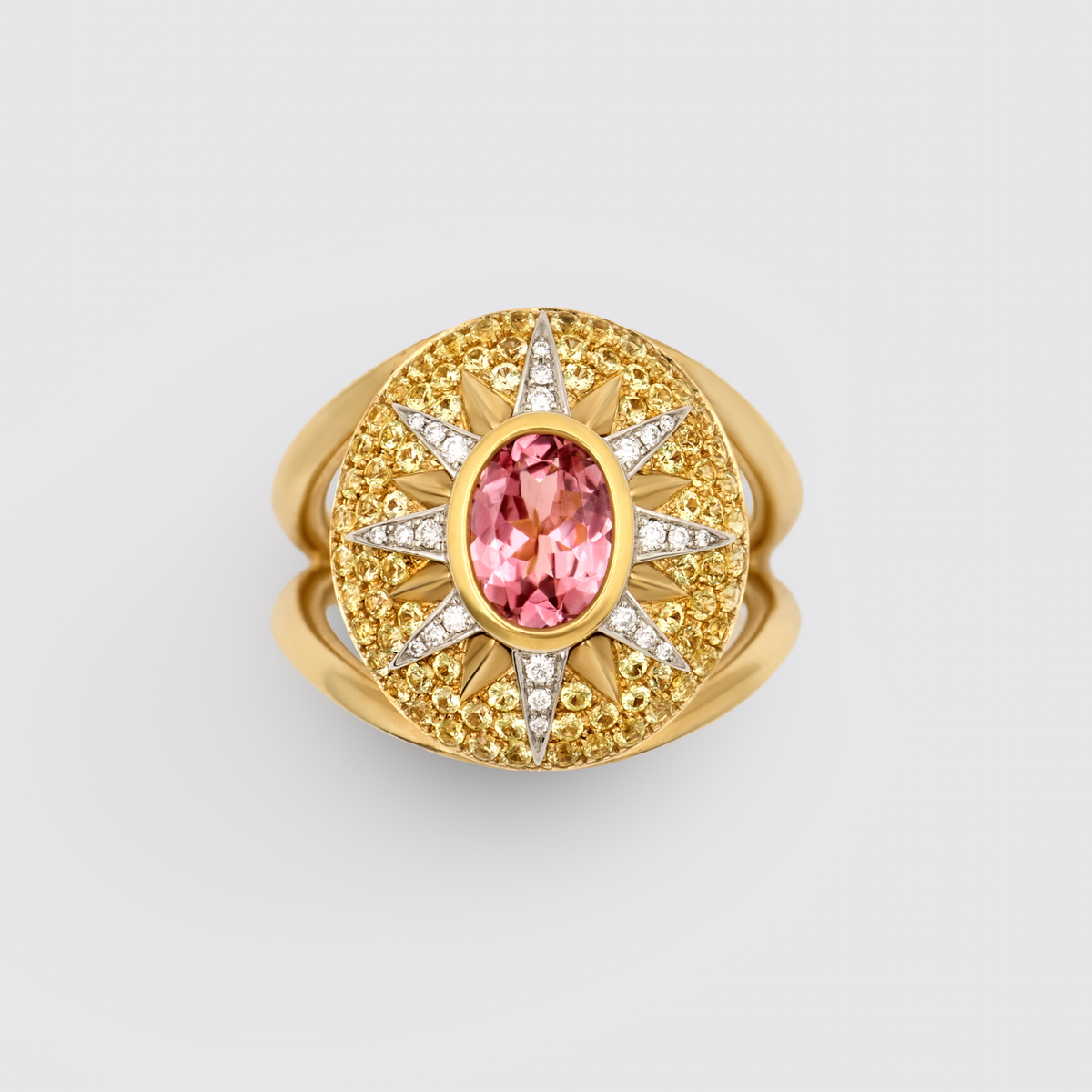
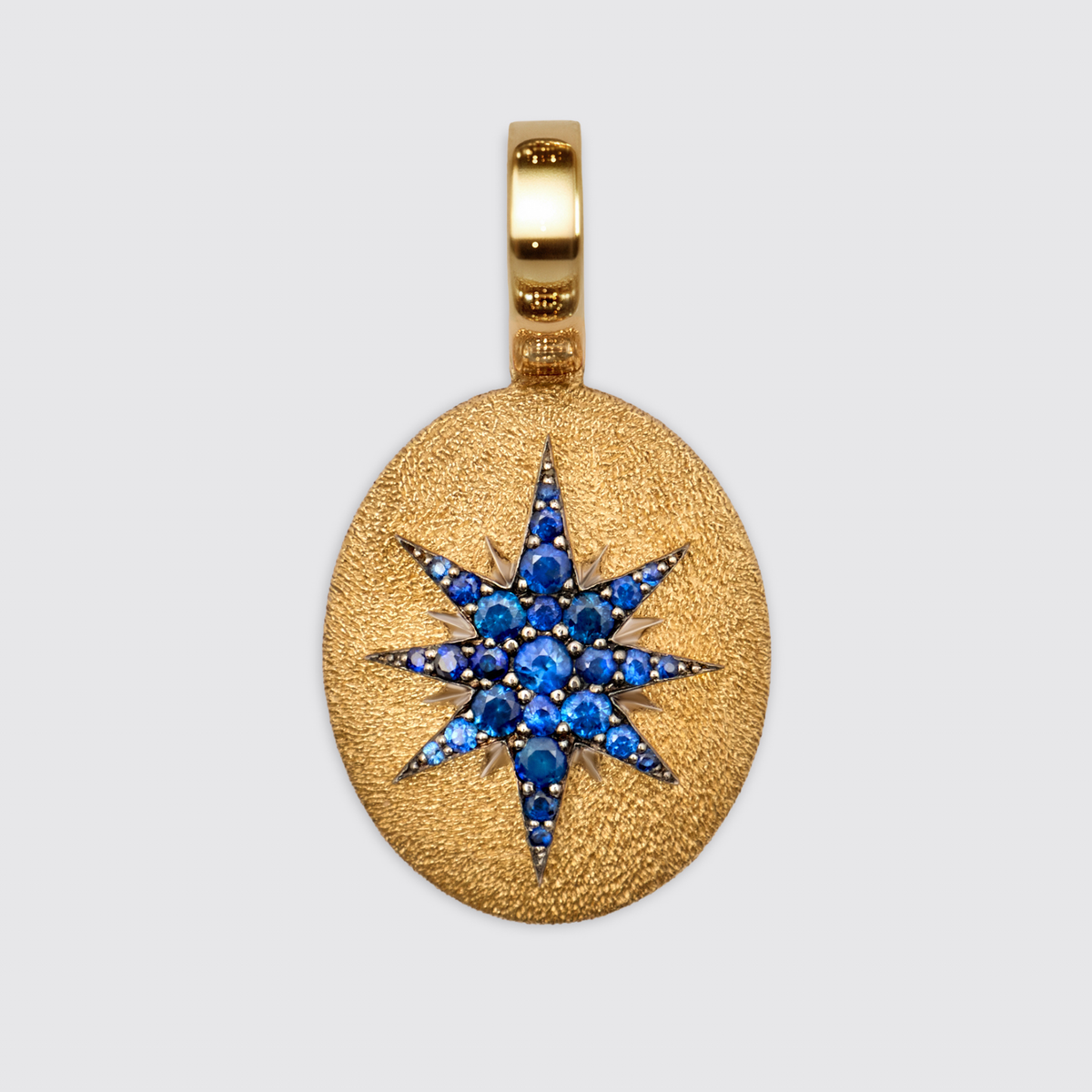
Yellow gold is the classic setting for coloured stones and remains the most forgiving. It flatters warm-toned stones (rubellite, pink tourmaline, orange and yellow sapphire, garnet) and gives green stones a rich, jewel-like depth. With blue stones the result is a deliberate contrast: sapphire or tanzanite in yellow gold reads as traditional, opulent, slightly antique. Yellow gold also hides minor wear well and needs no plating.
Best for: red, pink, green and warm-coloured stones; buyers who want a classic look; anyone who dislikes maintenance.
White gold: brightness and modernity
White gold makes colour look cooler and brighter. Blue stones are its natural partner: a blue sapphire, a tanzanite, an indicolite or a blue zircon in white gold looks luminous and contemporary, and the metal disappears visually so that only the colour remains. White gold also works for pale or pastel stones that yellow gold might overpower. The cost is maintenance: rhodium plating wears, particularly on rings, and a piece that is worn daily will need re-plating periodically.
Best for: blue and cool-coloured stones; pale or pastel stones; buyers who want a modern, understated frame.
Rose gold: softness and the pink family
Rose gold is the most flattering metal for pink and red stones, which it echoes rather than contrasts. A pink tourmaline or a rubellite in rose gold is a study in one colour family. It also suits warm skin tones exceptionally well and gives blue stones an unexpected, romantic softness. It is less neutral than the other two and makes a stronger stylistic statement.
Best for: pink, red and peach-coloured stones; buyers with warm complexions; anyone building a rose gold collection.
Skin tone changes the answer
The metal is seen against the skin as much as against the stone. Warm skin tones, with golden or olive undertones, are flattered by yellow and rose gold. Cool skin tones, with pink or bluish undertones, are flattered by white gold. Neutral skin tones can wear all three. When the ideal metal for the stone and the ideal metal for the skin disagree, most jewellers advise following the skin, since the piece will be seen on the wearer far more than in isolation. Two-tone designs, with a white gold setting on a yellow gold shank for instance, resolve the conflict elegantly.
Durability and maintenance compared
All three 18k alloys are durable enough for daily wear. White gold alloyed with palladium is slightly harder than yellow gold; rose gold, with its copper content, is the hardest of the three but can very slowly develop a deeper tone over decades. The only real maintenance difference is rhodium plating: white gold needs it renewed every few years on rings, less often on earrings and pendants. Yellow and rose gold need only occasional polishing.
One more practical point: white gold hides small scratches better than yellow gold in the short term because of the plating's hardness, but shows wear more clearly once the plating thins.
Recommendations by gemstone colour
Blue stones: sapphire, tanzanite, indicolite, blue zircon
White gold is the default for brightness and modernity. Yellow gold for a classic, contrasting, heritage look. Tanzanite in particular gains luminosity in white gold; its violet flashes become more visible against yellow gold.
Green stones: green sapphire, green tourmaline
Yellow gold deepens green and gives it richness; this is the traditional choice and usually the most beautiful. White gold makes green look fresher and more mineral, a good option for lighter or bluish greens.
Pink and red stones: rubellite, pink tourmaline, pink sapphire
Rose gold for harmony, yellow gold for warmth and a vintage feel, white gold to keep the pink looking fresh and cool. Saturated rubellite is spectacular in yellow gold; pale pink tourmaline is often at its best in white or rose gold.
Matching sets
For a ring and earrings set in one stone, use one metal throughout. The consistency is what makes a set read as a set. If the pieces will be worn separately more often than together, choose the metal that suits the stone and the wearer best, rather than the one that matches other jewellery already owned.
In summary
Yellow gold warms a coloured stone and suits reds, pinks and greens; white gold cools and brightens it and suits blues and pastels; rose gold harmonises with the pink family and warm skin. Skin tone should usually decide when stone and wearer disagree, and white gold is the only one of the three that needs re-plating. There is no universally correct metal for a coloured gemstone, only the one that makes this stone, on this person, look its best.